
The adaptive relationship
The relationship keeps moving.
Your bank should move with it.
Stratum connects what your bank already knows, owns and can do — so the relationship can respond to what matters now, within your rules and without replacing the systems that run the bank.
Built in banking. Proven in complex, regulated environments.
From everything available. To what matters now.
Why do anything?
One relationship. Everything around it keeps changing.
As people and businesses change, the bank may move them between segments, teams and propositions. The relationship should keep its history, permissions and context — even when the internal category changes.
The bank may see
- Youth
- Retail
- Merchant
- SME
- Corporate
- HNWI
The customer experiences
One relationship.
The category can change. The relationship should continue.
Ask yourself
When a customer’s circumstances change, can the bank use what it already knows to adapt the experience?
Why now?
Different research. Same direction.
Across banking research, the emphasis is moving beyond digitised products towards relationships that can respond to context, change and need.
Four firms, four methods, four vocabularies — arriving at the same requirement.
What this means for banks
The advantage is shifting from what a bank can offer to how well it can respond.
Independent perspectives from McKinsey, Accenture, Forrester and EY. The synthesis above is Stratum’s interpretation of the common direction.
Evaluate your bank
Can your bank do these four things today?
Not as four separate projects — as one continuous ability to respond to the relationship.
01Recognise
Can you tell when something relevant has changed?
A transaction, balance, location, new need or another meaningful event.
02Understand
Can you see that change in the context of the whole relationship?
Not just one account, one product or one channel.
03Apply
Can you apply your own rules before deciding what should happen?
Eligibility, permissions, risk, product policy and customer status.
04Respond
Can the experience change without rebuilding what is underneath?
A different service, journey, message or intervention — when it becomes relevant.
The useful question is not whether each capability exists somewhere. It is whether they work together.
Why Stratum?
The systems stay. The relationship becomes adaptable.
Stratum sits above the systems your bank already uses. It connects data, services, rules and journeys so they can work together around the customer — without moving the ledger or forcing a core replacement.
What the bank can now do
Connects the bank’s data, capabilities, rules and journeys around the relationship.
What you already have
Nothing moves in the ledger. What changes is the layer the customer actually meets.

How it works
Everything available is not equally relevant.
Stratum keeps the bank’s data, events, capabilities and rules available. When something changes, it determines what matters for this relationship now — then brings forward the appropriate experience.
-
01 · Available context
Everything availableSignals, events, services, permissions and context remain available until they become relevant.
-
02 · Relevant now
What matters nowThe platform identifies the relevant context, then applies the bank’s own rules and permissions.
-
03 · Experience
The experience respondsRelevant services, journeys and content move forward. Everything else remains available.
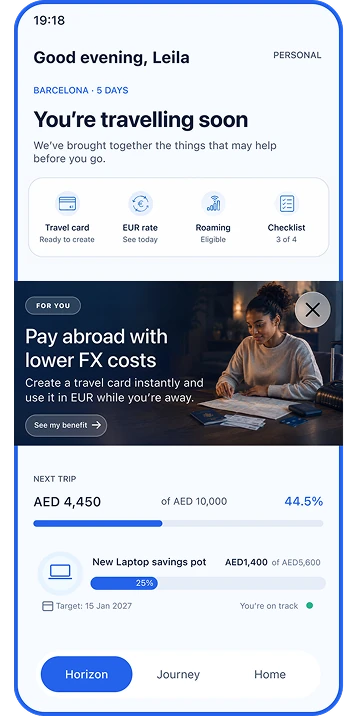
Everything stays available, and only what matters now is brought forward.
One relationship. Many moments.
Life doesn’t happen in categories.
The relationship keeps accumulating context. What matters changes with the moment — and later, the bank may classify the same person very differently.




18
Independence begins
The relationship already has identity, permissions, accounts and history. Independence changes what should come forward.
Available relationship context
Everything remains available. What matters changes with the moment.
Bank rules apply
Brought forward
Scroll to follow the relationship
Where do you want to start?
Start with the change that matters most.
Stratum does not need to begin as a bank-wide programme. Start with a priority initiative and expand from there.
One initiative is enough to start. Expansion is a decision you take later, with evidence.
Ready to explore?
Your bank already has much of what it needs. Stratum helps make it work together.
Start with the problem you need to solve — a journey, a segment, a market or a relationship that needs to respond better.
 STRATUM
Adaptive digital services for banking relationships.
STRATUM
Adaptive digital services for banking relationships.